
How to Write a Resume for Government Jobs in Australia (2026)
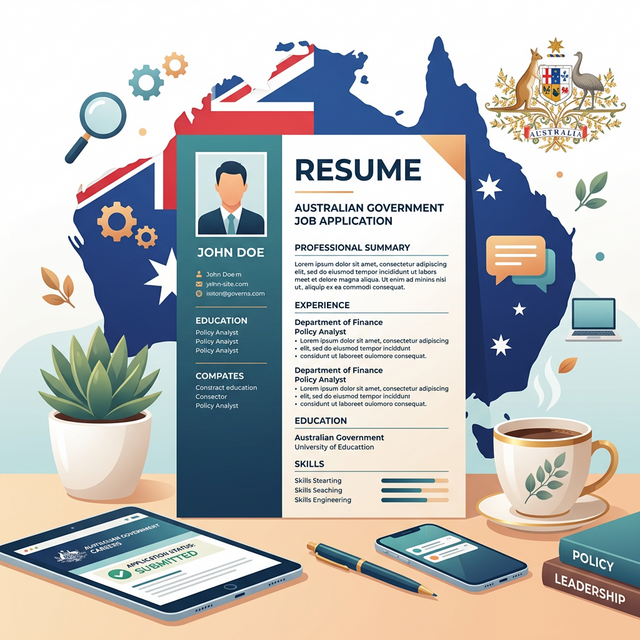
Creating a winning resume for government jobs in Australia requires much more than simply listing your employment history. With the high volume of applications received by the Australian Public Service (APS) and state/local government departments, agencies increasingly rely on Applicant Tracking Systems (ATS) to filter candidates.
Whether you're targeting a role in federal policy, state health, or local council administration, your resume must be strategically crafted to meet strict ATS standards while effectively demonstrating your alignment with the Integrated Leadership System (ILS) or relevant capability frameworks.
Understanding ATS Standards for Government Resumes
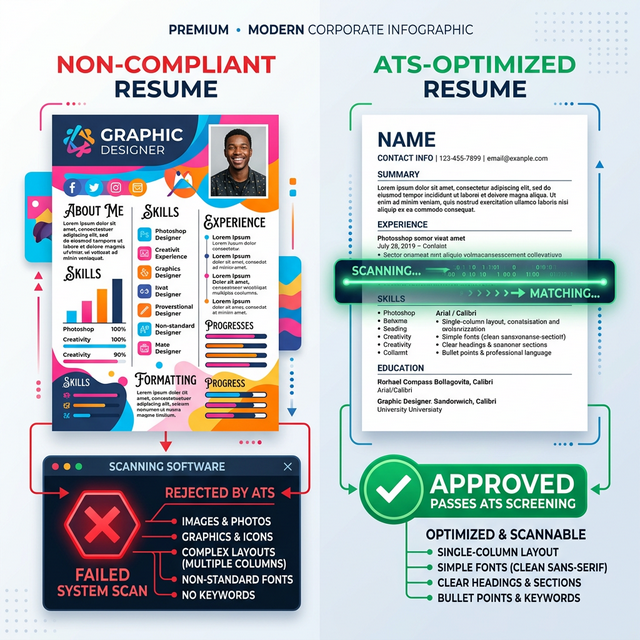
An Applicant Tracking System (ATS) is software that scans, parses, and ranks your resume based on specific keywords and formatting rules before a human recruiter ever sees it. To ensure your resume successfully passes these digital gatekeepers, you must follow ATS compliance rules:
- Use a Clean, Single-Column Format: ATS software often struggles to read multi-column layouts, tables, and complex graphics. Stick to a straightforward, top-to-bottom layout.
- Standardize Your Headings: Use recognizable section titles like "Professional Experience," "Education," and "Key Skills."
- Choose ATS-Friendly Fonts: Stick to standard, easy-to-read web fonts such as Arial, Calibri, Roboto, or Helvetica.
- Save in the Correct Format: Unless explicitly asked for a PDF, a `.docx` file is generally the safest format for ATS scanning.
Addressing Selection Criteria (The STAR Method)
In Australian government applications, your ability to address the selection criteria is just as critical as the resume itself. Often, these criteria are integrated into your resume or provided as a supplementary document. When highlighting your achievements in your resume, always use the STAR Method:
- Situation: Briefly set the context or describe the background.
- Task: Explain the specific challenge or objective you faced.
- Action: Detail the precise steps you took to address the task.
- Result: Quantify the outcome. What was the tangible impact of your actions?
Pro Tip: When applying for federal roles, always align your responses with the APS Work Level Standards. If the job asks for a "Pitch" instead of a traditional cover letter, use the STAR method directly within the 1-2 page pitch document to provide compelling evidence of your capabilities.
Key Sections to Include in Your Government Resume
A structured approach ensures that both the ATS and the human reviewer can quickly find the information they need. Remember, the APS highly recommends following their official "Cracking the Code" guide for structure.
1. Professional Profile / Summary
A concise, 3-4 sentence paragraph at the top of your resume highlighting your core competencies, years of experience, and a high-level summary of your value proposition tailored to the specific government agency.
2. Key Competencies & Skills
Include a bulleted list of 6-9 critical skills matching the keywords found in the job description.
3. Professional Experience
Format your experience in reverse chronological order. For each role, include Job Title, Department/Organization, Dates of Employment, and 3-5 bullet points of quantifiable achievements using the STAR method.
4. Education and Qualifications
List your highest degree first. Include the degree name, institution, and graduation year.
Resources for Further Assistance
Navigating the complexities of Australian government job applications can be challenging. By ensuring your resume is ATS-compliant and effectively communicates your value through the STAR method, you dramatically improve your chances of securing an interview.
For more detailed insights, check out our comprehensive guide on bypassing ATS. Need help tailoring your application to a specific role? Review our essential 2026 resume tips.